
Flash Dryer
Drying in Seconds · High Thermal Efficiency · Preserves Product Quality
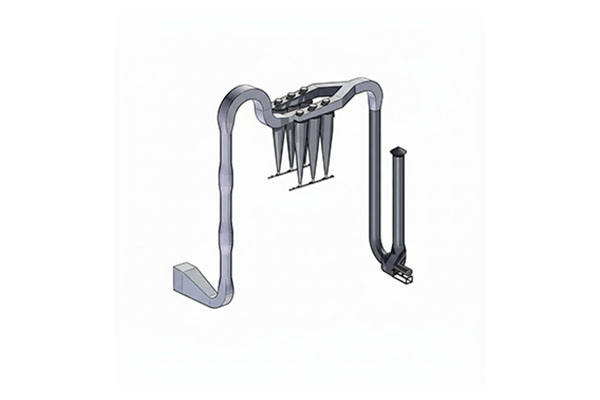
PURPOSE: Rapid drying of powdery and granular materials to reduce moisture content effectively.
USE FIELDS:
Food Industry: Drying of starch derived from potatoes, corn, wheat, cassava(mandioca, yuca), and sago.
Chemical Industry: Drying of heat-sensitive chemical powders and materials.
DESCRIPTION:
The FD Series Flash Dryer is characterized by its operational stability, high throughput, and superior thermal efficiency. It is widely recognized as the standard solution for the starch industry, offering convenient operation and maintenance.
- Stainless Steel Construction: All components in contact with the product are manufactured from high-grade stainless steel to prevent corrosion and ensure product purity.
- High Drying Intensity: Features a high heat transfer coefficient and rapid drying time (seconds). This ensures high capacity without thermal degradation, preserving the product's natural color and quality.
- High-Efficiency Separation: Equipped with a dedicated cyclone separator designed for maximum product recovery and long service life, fully compliant with national food hygiene standards.
- Maintenance Friendly: Strategically positioned access ports (manholes) allow for easy internal cleaning and maintenance.
- Negative Pressure System: Operates under negative pressure to prevent dust leakage, ensuring a clean working environment and stable operation.
- Process Monitoring: Standard configuration includes a comprehensive set of temperature sensors for real-time monitoring of equipment status.
- Intelligent Control (Optional): Available with an optional PLC-based control system, including automatic valves and inline moisture/temperature monitoring, to automatically regulate product quality.
PRINCIPLE:
The Flash Dryer operates on the principle of pneumatic transport and instantaneous heat transfer.
- Feeding: Wet granular materials are introduced into the drying duct via a feeder.
- Flash Drying: High-velocity hot air enters the system and mixes turbulently with the wet material. The material is suspended in the air stream, maximizing the surface area for heat exchange.
- Evaporation: Heat and mass transfer occur instantaneously, evaporating the moisture in a fraction of a second.
- Separation: The dried powder flows into the cyclone separator where it is separated from the moist air, while the exhaust air is discharged by the fan.
Part of a Complete Processing Line
This unit integrates with our complete starch processing systems. View the full line or request a custom process flow tailored to your raw material and capacity.